राष्ट्रीय चिरस्थाई जलकृषि केन्द्र
National Centre for Sustainable Aquaculture
MPEDA, Ministry of Commerce & Industry, Govt. of India
Empowering small & marginal scale aquafarmers towards Sustainable Aquaculture
At the National Centre for Sustainable Aquaculture (NaCSA), we're dedicated to transforming the lives of small and marginal aquafarmers across India. We believe in making aquaculture a truly sustainable activity that not only improves livelihoods but also addresses critical international market demands for food safety through a collaborative approach involving all stakeholders.
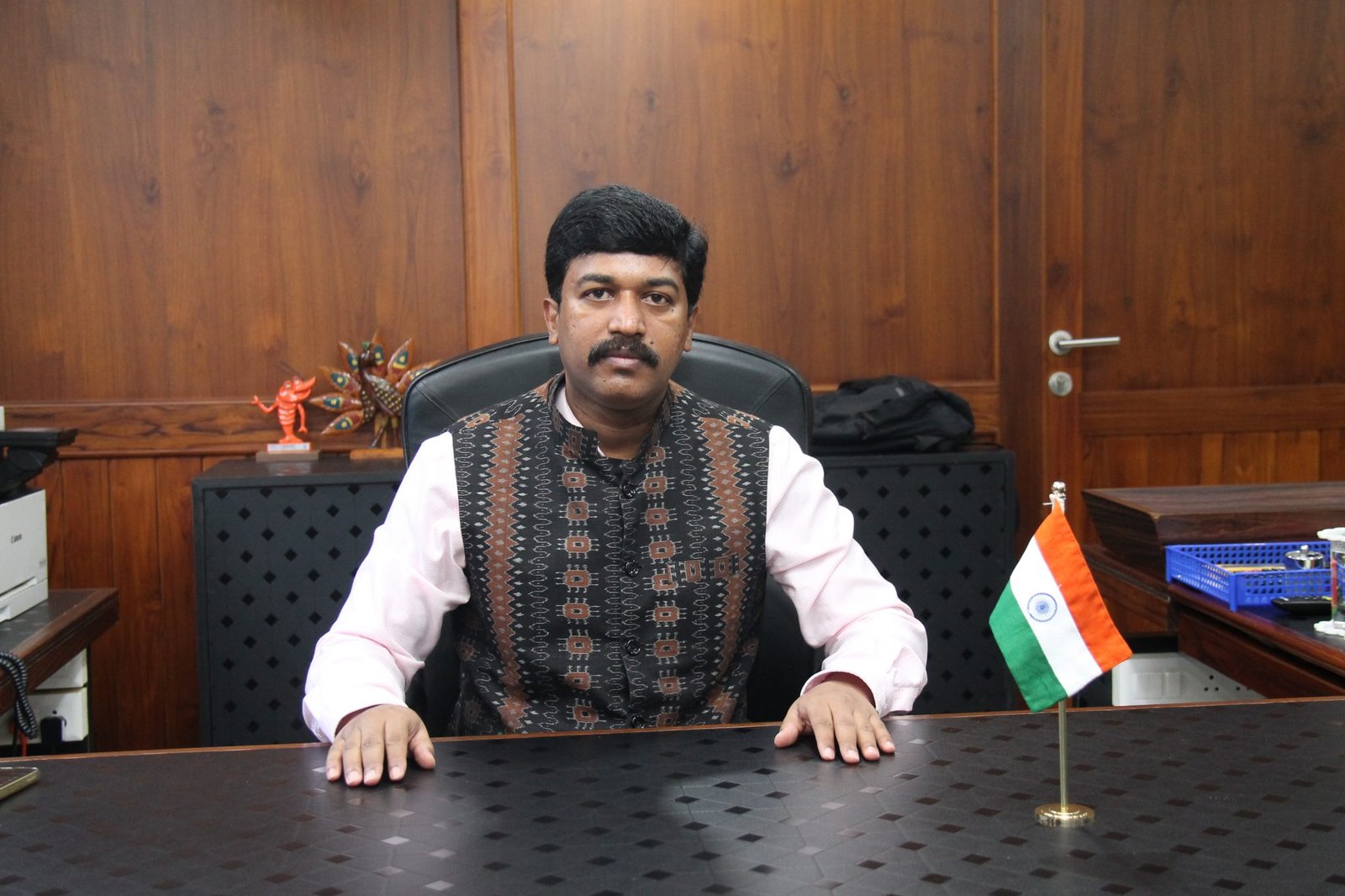
Shri. Dodda Venkata Swamy IAS
I welcome you to MPEDA for any support in seafood export trade.
The Marine Products Export Development Authority (MPEDA) is a statutory body established in 1972 under the Ministry of Commerce & Industry to promote marine products export from India. We have been guiding and supporting the country's seafood industry to produce and process quality seafood and market it.
I am glad to inform you that the marine products exports have reached USD 8.09 Billion in 2023. This achievement marked a quantum jump over our accomplishments during the previous years. First, let me congratulate the exporters for achieving 4.31% growth from a year earlier. I also take this opportunity to thank all other stakeholders and the entire fisheries fraternity for being part and parcel of this success story.
The seafood exports from the country are facing a whole gamut of issues, and its resurgence after three harrowing years is an accurate morale-booster dose for the national economy. Currently, India is exporting to more than 120 countries. With the vast resources of coastlines and pristine waters, India can promote culture and capture fisheries for safe and sustainable fishery production. The marine products export from India is targeted to reach USD 14 billion by 2025. MPEDA has already submitted a road map to achieve this goal, including the interventions required in the production, value addition and market promotion of seafood.
This website is an excellent knowledge repository and will give you a glimpse of MPEDA’s role in various seafood production, processing, marketing and export activities. We have tried to place maximum information on this site and make it user-friendly. I invite you to review each page and study the information packs and videos here. We are open to your critical review and seek suggestions to improve the efficacy of this site. Further, please feel free to contact us for any additional information.
Cluster Based Approach, Best Practices, and Innovation
For years, many small-scale shrimp farmers operated independently, often relying on traditional methods. Recognizing the need for a unified and modern approach, NaCSA has been advancing collective action and scientific innovation as the way forward
We bring farmers together, grouping them into societies. This "Self Help Group" model fosters mutual support, shared learning, and collective strength, enabling farmers to navigate challenges and achieve greater success together.
We educate and train these societies on Better Management Practices (BMP). These are essential for ensuring safe, environmentally responsible, and highly productive shrimp farming. From optimizing water quality to sustainable feeding, BMPs are the cornerstone of our program.
A key pillar of our strategy is the cluster approach to shrimp farming. This involves organizing interdependent aquaculture ponds within a specific geographical area to work together. These clusters are characterized by:
This collaborative cluster model offers significant advantages, including reduced production costs, enhanced disease prevention, and a stronger collective bargaining position in the market.
NaCSA is committed to fostering a future where every small-scale aquafarmer thrives through sustainable practices and a strong community network. Join us in building a vibrant and responsible aquaculture sector.
About us
NaCSA is working towards making Aquaculture a sustainable activity to improve livelihoods of coastal villagers, with a “Self Help Group” approach and international markets to address food safety and other market concerns through the collaborative approach of all stakeholders involved.
NaCSA started grouping these farmers into societies and educated them on better management practices (BMP) for safe and sustainable shrimp farming. NaCSA also trained these farmer societies to follow a cluster approach in shrimp farming. A cluster refers to interdependent aquaculture ponds often situated in a specified geographical locality and in close proximity to each other with the following characteristics:

Notifications
NaCSA conducts farmer training in Andhra Pradesh to improve sustainable shrimp practices.
New cluster development program launched for coastal aquaculture in Nellore district.
Digital traceability tools introduced to monitor shrimp health and feed quality.
Awareness drive on water quality and best practices.